
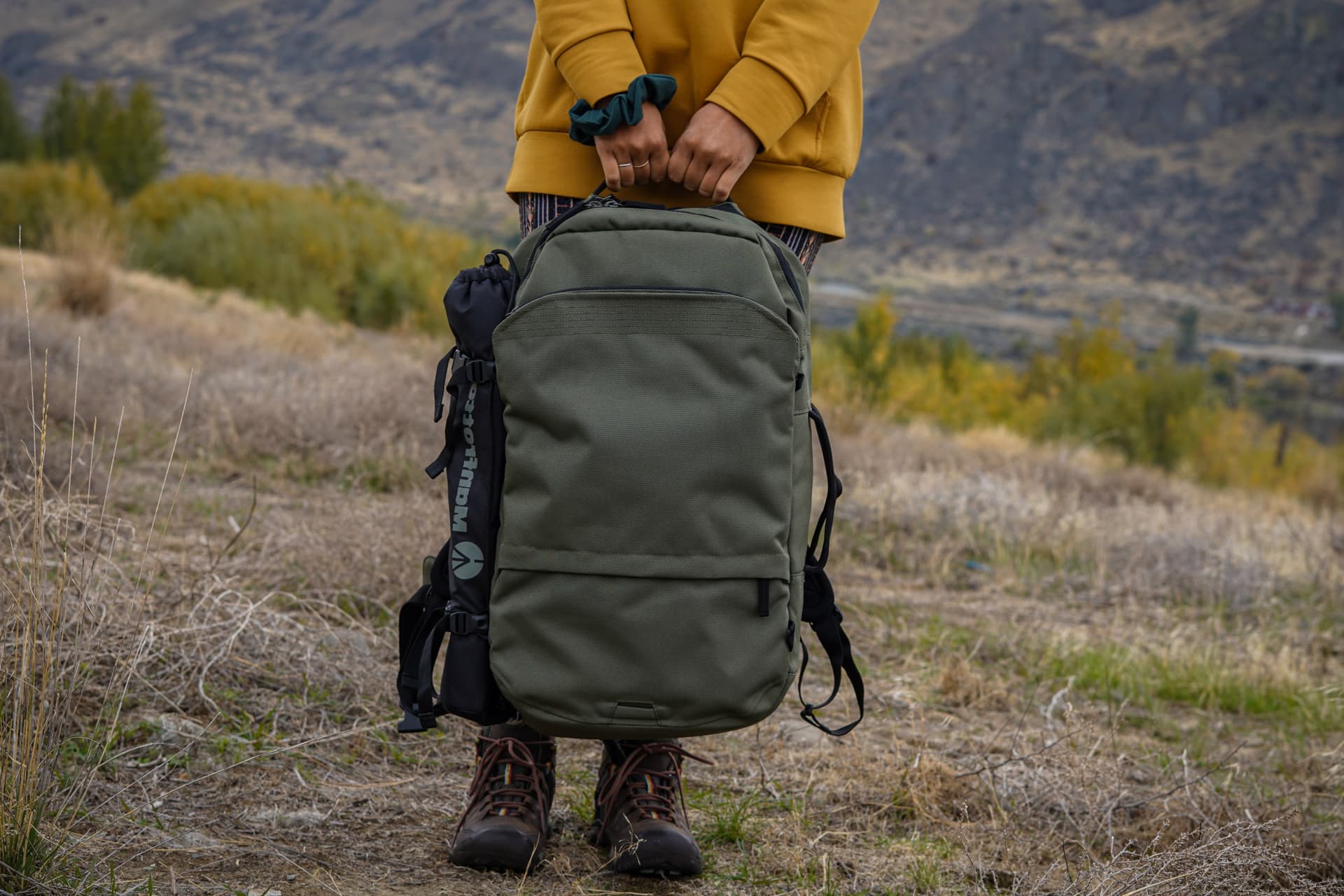
- Measure your torso length: For this, you need to stand straight and then bend forward slightly. Place the tape measure on your back just above the top of your hip bones. The end of the tape should be hanging down in front of you. The measurement is taken from this point to where it intersects with a vertical line drawn at eye level when you look down toward the floor
- Measure your waist size: Hold one end of the tape around the narrowest part of your waist. Make sure that it’s not too loose or too tight!
- Measure your chest size: Measure across the bottom edge of both breasts where they meet in front. If this measurement is close to or larger than waist size, consider choosing a smaller backpack.
Choose a Bag That Fits Your Body Type
Choosing a backpack that is comfortable and fits your body type is essential to making sure you enjoy your trip. If the backpack doesn’t fit properly, it can cause pain or discomfort during prolonged use. It may be necessary to purchase a larger bag if you have a lot of travel gear, but generally it should fit snugly enough so that there is no “sloshing” of contents inside the pack.
Why Packability Is Important
- Packability: A measure of how much a backpack can compress into itself. As you may know, this is important because the smaller your backpack is when it’s not in use, the easier it will be to store in your car or closet and take with you when traveling.
- Lightweight: Lightweight backpacks are great for travel because they help you avoid carrying too much weight on your shoulders and back. If you’re backpacking through Europe and visiting multiple countries over a long period of time, having light luggage will make things easier on those long treks between cities!
Backpack Style
Backpack style is another important factor to consider. Backpacks come in a variety of styles, each with its own set of pros and cons.
- Daypack Style: This is the smallest type of backpack, meant for short trips or as an everyday bag. It has one shoulder strap, usually padded for comfort, and usually weighs less than two pounds. They tend to be more streamlined than other types of backpacks because they sacrifice space for convenience; daypacks are designed to carry what you need for a single outing without carrying extra items that may weigh too much down or wear out quickly over time — such as if you’re traveling lightly and staying near home most days but occasionally take longer trips out into nature (where hiking trails may call for extra supplies).
- Laptop Backpack Style: The laptop backpack style is designed specifically around protecting your laptop from damage during travel by placing it inside a padded compartment within the backpack itself; this helps prevent damage like scratches or dents caused by shifting cargo during transit at airports or train stations – places where laptops typically aren’t allowed due to security concerns unless they’re contained within another container such as this type of bag which provides both protection against impacts while also serving its purpose well enough that it won’t be searched when passing through checkpoints (since there’s nothing suspicious looking about having one!).
Daypack or Laptop Backpack
Daypacks are smaller and lighter, with more compact dimensions. They are also less expensive than laptop backpacks. In general, if you’re going to be carrying around a lot of stuff and just need something to carry it all in, a daypack will be more than enough for your needs.
Daypacks have an average capacity of between 35 liters (for small daypacks) up to 80 liters (for large ones). They tend not to have as much space as laptop backpacks but most people find them quite adequate for their needs as long as they’re not carrying huge loads or bulky items.
Also, don’t buy the first backpack you see. Secondly, don’t just buy one because it’s cheap — you want something that will last and won’t break down on you halfway through your trip. Thirdly, avoid buying an expensive product simply because it looks good in advertisements or fashion magazines; sometimes those things are more expensive than they’re worth (or even fake). Fourthly and finally: Don’t buy something trendy just because everyone else has one; if you find something with great functionality but boring design then go for it!